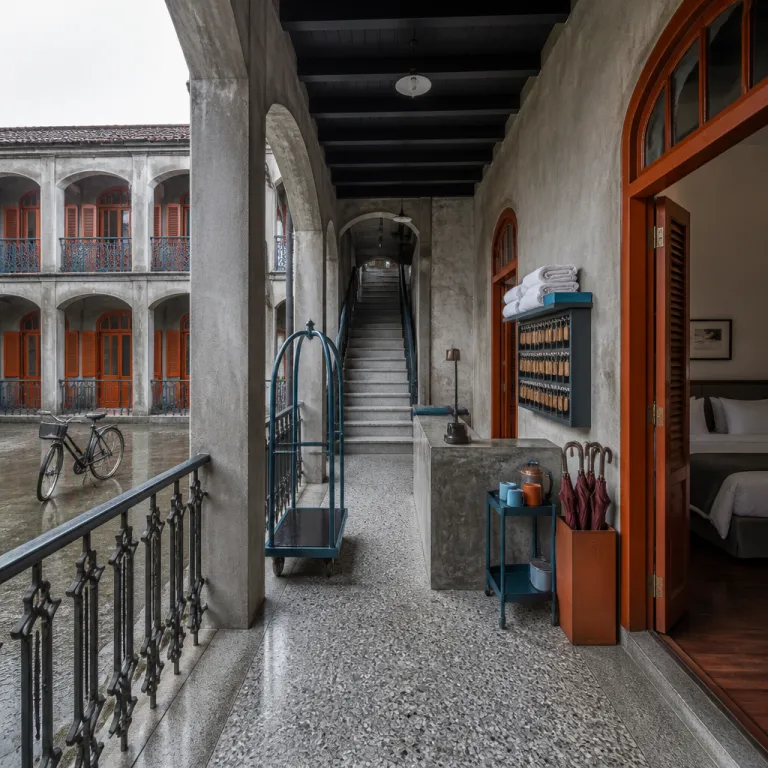
Accommodation Taiwan for families who want history with their keycard
Accommodation Taiwan for premium families starts with a simple choice between character and convenience. In cities like Taipei and Tainan, the most memorable places to stay are often Japanese colonial-era buildings that now operate as refined hotels, turning every night into a quiet history lesson. When you plan your trip, the question is not whether to book a hotel, but which of these layered accommodations will best match your children’s curiosity and your need for comfort.
Across Taiwan, more than one thousand Japanese-era buildings still stand, and a growing number are being converted into luxury hotels with fewer rooms and more personality. According to reporting in Taiwan News and local heritage surveys, this building stock ranges from former hot spring inns to old administrative offices. These hotels are usually located in dense city neighborhoods, close to an MRT or train station, where a short walk takes guests from a preserved wooden staircase to a busy night market. For families comparing accommodation Taiwan options, these properties often sit between a conventional star hotel and a museum, with reviews that highlight both the architecture and the warmth of the front desk team.
In Taipei, the Beitou Museum is a perfect example of how a former Kazan Hotel can become a cultural landmark without losing its hospitality DNA. The museum sits in the wider Taipei area, where hot spring history, Japanese timber detailing, and contemporary Taiwanese design meet in one carefully restored building. Museum statistics cited in local media note that it welcomes around 50,000 visitors per year, many of whom come specifically to experience its architecture. When you read reviews, you will notice how often guests mention the feeling of staying in a living story rather than a standard hotel Taipei tower, and that is the essence of this style of accommodation Taipei travelers now seek.
Taipei’s heritage stays: from Dadaocheng alleys to Ximending neon
Taipei is the natural starting point for exploring accommodation Taiwan that blends Japanese colonial bones with modern service. In Dadaocheng, merchants’ houses with tatami rooms and shoji screens now operate as intimate hotels Taipei travelers book for their proximity to the riverfront and the old tea warehouses. These accommodations usually offer fewer rooms, but each room is different, with original timber beams, high ceilings, and carefully restored tile floors that feel both historic and wonderfully practical for families.
Move west and the mood shifts around Ximending, where Japanese-era cinemas and dormitories sit behind the neon and street art. A hotel located near the Taipei Ximen and Taipei Ximending MRT stations gives you fast access to the Red House, the youth culture streets, and the city’s most photographed crosswalks, while still keeping you within a short walk of quiet side lanes. For a premium family stay Taipei visitors often choose a property where the front desk can arrange kid-friendly food tours and point you to the closest night market without sending you into overwhelming crowds.
Many travelers arrive via Taoyuan Airport, head straight to Taipei Main, and then choose accommodation Taipei options that balance transit convenience with heritage charm. A hotel near the main station or a train station in the Taipei area can still be housed in a Japanese-era building, especially in older districts where preservation rules are strict. When you compare reviews good and bad on platforms like an Agoda booking page, look for comments about noise levels, room size, and whether the 24-hour front desk team understands how to pace a city day for younger guests.
For travelers extending their trip beyond the capital, Taipei also serves as a hub for hot spring escapes in Yilan County. If you are considering refined mineral-water stays, this guide to Jiaoxi hot spring escapes pairs well with a heritage hotel Taipei base, creating a two-stop itinerary that mixes urban history with rural relaxation. As one parent put it in a recent review, “Our kids spent the morning counting old roof tiles in Dadaocheng and the afternoon racing between hot spring pools in Jiaoxi.” The contrast between a wooden engawa veranda in the city and a contemporary onsen-style pool in the countryside is one of the quiet luxuries of accommodation Taiwan can offer.
Tainan’s layered mansions: where Dutch walls meet Japanese timber
Tainan is where accommodation Taiwan becomes a full architecture seminar for families who like stories with their sleep. The city’s Dutch-era street grid, Chinese temples, and Japanese colonial offices overlap in a compact center, and many of the most interesting hotels are located inside former merchants’ mansions. A hotel Tainan stay often means climbing a narrow staircase, stepping into a room with tatami mats, and then opening windows that look onto a baroque temple roof or a tiny alley café.
These hotels rarely have many rooms, and that is part of their appeal for premium family travelers. Instead of a large star hotel with identical rooms, you might find a property with ten rooms, each one shaped by the building’s original structure, where some rooms are perfect for parents and children while others work better for couples. When you read reviews, pay attention to how guests describe the balance between heritage charm and practical details like air conditioning, soundproofing, and the responsiveness of the front desk team.
In Tainan, adaptive reuse is not a trend but a citywide habit, and accommodation options range from minimalist timber houses to grand stone residences. Many of these accommodations are located within a short walk of major temples, small night markets, and the city’s famous snack streets, which makes it easy to structure a trip around food and history. For families planning a longer stay in Taiwan, combining a few nights in a hotel Tainan mansion with time in a hotel Taipei property gives children a clear sense of how different each city feels, even when both hotels share Japanese-era architectural roots.
When you are mapping out a multi-city itinerary, it is worth looking at how other destinations fit into this heritage pattern. Taichung, for example, has quietly attracted international brands while still nurturing smaller adaptive reuse projects, as explored in this analysis of Taichung’s evolving hotel scene. For a deeper dive into how these cities connect for premium travelers, the overview of Taiwan tours for luxury travellers offers sample routes that link Taipei, Tainan, and smaller towns into one coherent journey.
Between museum and hotel: how preservation shapes the guest experience
Staying in a Japanese colonial-era hotel in Taiwan is not like checking into a new glass tower, and that is the point. Strict heritage rules often mean no new elevators, limited façade changes, and creative plumbing solutions, which directly influence how accommodation Taiwan feels underfoot. Families used to large chain hotels may find the rooms smaller, the staircases steeper, and the layouts more idiosyncratic, yet these quirks often become the details children remember most vividly after the trip.
Properties such as the Beitou Museum in Taipei, the Antong Hotel in Hualien, and the historic Tomoe Ryokan in Yangmingshan illustrate different stages of this adaptive reuse journey. The Beitou Museum shows how a former Kazan Hotel can become a cultural institution that still feels like a gracious mountain retreat, while Antong Hotel’s restoration highlights the potential of hot spring heritage on the east coast. Local news reports describe Antong as one of Taiwan’s earliest hot spring resorts, now being carefully revived as a heritage hotel. Tomoe Ryokan, once a classic hot springs hotel, now stands as a historic site where ongoing restoration work signals how seriously Taiwan treats its Japanese-era hospitality legacy.
For premium families, the key is to read reviews with an eye for context rather than absolute scores. A review that calls a room small might still describe a wonderful sense of place, with original woodwork and a short walk to an MRT station or night market that makes logistics easy with children. When you scan reviews good and bad on an Agoda booking page or other platforms, look for mentions of how the 24-hour front desk staff handle luggage on stairs, late check-ins from Taoyuan Airport, and special requests for connecting rooms or extra bedding.
One practical tip is to contact the front desk before finalizing your booking, especially in smaller hotels located in older buildings. Ask directly about room configurations, whether any rooms are better suited to families, and how far the hotel is from the nearest MRT or train station in the city. As one Tainan guest recalled, “The owner emailed us a hand-drawn map showing the quietest route to the night market, and our kids still talk about that walk.” This kind of pre-trip conversation often reveals more than any star rating and helps you choose accommodations that turn preservation constraints into part of the pleasure of staying.
Reading the map: where colonial-era stays cluster across Taiwan
Heritage-focused accommodation Taiwan is not limited to the capital and the old southern city. While Taipei and Tainan remain the most popular names on family itineraries, smaller cities such as Hualien and Chiayi also host Japanese-era hotels that are quietly reopening after careful restoration. These hotels are usually located near historic train stations or former administrative quarters, where the original urban fabric has survived postwar redevelopment.
Hualien’s Antong Hotel, for example, anchors a growing interest in hot spring and coastal heritage on the east coast. Local cultural organizations often cite it as a model for reviving early 20th-century resorts. Families who plan a trip that combines Taipei, a hotel Tainan stay, and a few nights in Hualien can experience very different landscapes while still sleeping in rooms shaped by the same colonial architectural vocabulary. In each city, the best accommodations tend to sit within a short walk of local markets, waterfront promenades, or temple districts, which keeps daily logistics simple even when you are traveling with younger guests.
Back in Taipei, the Beitou and Yangmingshan areas show how hot spring culture intersects with Japanese-era hospitality. Properties near the MRT in Beitou or the mountain roads of Yangmingshan often retain original timber structures, tatami rooms, and engawa-style verandas, while adding modern comforts that premium families expect. When you compare accommodation Taipei options, consider whether you want to stay closer to Taipei Main and the main station area for transit convenience, or in these greener districts where the city’s pace slows and the architecture tells a different story.
Across Taiwan, local governments, cultural organizations, and tourism boards are investing in adaptive reuse as a long-term strategy. Architectural restoration, historical research, and community engagement are the main tools, supported by government funding that recognizes how these hotels attract guests who value culture as much as comfort. For families, this means that each new season brings more choice in heritage accommodations, and planning a stay Taipei or a wider Taiwan trip becomes an exercise in matching your interests with the specific stories each building carries.
How to choose and book the right heritage hotel for your family
Choosing the right accommodation Taiwan for a premium family trip starts with clarifying your priorities. Do you want to be steps from an MRT station and a night market, or would you rather trade that convenience for a quieter street near a museum or temple complex? In Taipei, hotels located near Taipei Ximending, the Red House, or Taipei Main offer easy transit and entertainment, while properties in Dadaocheng or Beitou lean more toward slow-paced heritage and hot spring rituals.
When you compare hotels Taipei options, focus on three elements in the reviews. First, look at how guests describe the rooms, especially if you need multiple rooms or a larger room that can comfortably fit children without feeling cramped. Second, pay attention to comments about the front desk and 24-hour front desk availability, because smaller heritage hotels sometimes have limited staffing, which can affect late arrivals from Taoyuan Airport or early departures for a train station connection.
Third, read how guests talk about the neighborhood around the hotel, not just the building itself. A hotel located within a short walk of an MRT stop, a family-friendly night market, or a park can transform your stay Taipei experience, especially when you are managing different energy levels and interests. In Tainan and other cities, check whether the hotel Tainan or regional property sits near major sights or requires frequent taxi rides, because proximity often matters more than room size when traveling with children.
For booking, use platforms that combine detailed reviews with clear room descriptions, and then follow up directly with the hotel once you have narrowed your choices. An Agoda booking page can be a useful starting point for comparing prices and reading reviews good and bad, but a direct email to the front desk often yields better information about specific rooms, extra bedding, or child-friendly amenities. This two-step approach respects the heritage constraints of these buildings while ensuring that your accommodations in Taiwan feel tailored to your family rather than improvised on arrival.
Why these hotels matter: culture, memory, and the future of accommodation Taiwan
Japanese colonial-era hotels in Taiwan are more than atmospheric backdrops for a stylish city break. They are physical records of a complex period, and staying in them turns accommodation Taiwan into a form of cultural participation rather than passive consumption. For families, this means your children are not just seeing temples and museums during the day, but also sleeping inside the layered history that shaped modern Taiwanese cities.
Preservation efforts at places like the Beitou Museum, Antong Hotel, and Tomoe Ryokan show how hospitality and heritage can reinforce each other. Local governments and cultural organizations support these projects because they maintain cultural memory, boost tourism, and educate both residents and visitors about the island’s architectural legacy. As one frequently asked question puts it, “What is the Beitou Museum?” and the answer is simple yet revealing: “A museum in Taipei, formerly the Kazan Hotel.”
For premium travelers, choosing these hotels is a vote for a particular future of accommodation Taipei and beyond. Instead of favoring only new builds near main station complexes, you are supporting a model where carefully restored rooms, attentive front desk teams, and context-rich neighborhoods define what a good stay feels like. Over time, as more Japanese-era buildings across Taiwan become hotels rather than static museums, guests will have an even wider range of accommodations that combine comfort, narrative depth, and a sense of place that no anonymous tower can match.
Key figures behind Taiwan’s colonial-era hotel revival
- More than 1,000 Japanese-era buildings remain across Taiwan, according to Taiwan News and heritage inventories compiled by local governments, a scale that gives the adaptive reuse movement a deep reservoir of potential future hotels and cultural venues.
- The Beitou Museum in Taipei, housed in the former Kazan Hotel, welcomes around 50,000 visitors per year, based on museum data reported in local media, showing how a single restored property can anchor both tourism and local cultural education.
- Heritage tourism has grown steadily in Taiwan over recent years, with increased government funding directed toward architectural restoration and community engagement projects that often culminate in new hotels or guest accommodations.
- Preservation initiatives typically involve partnerships between local governments, cultural organizations, and tourism boards, ensuring that restored hotels serve both as viable businesses and as public-facing heritage sites.
- Ongoing restoration work at properties such as Antong Hotel in Hualien and Tomoe Ryokan in Yangmingshan is regularly covered in Taiwanese news outlets, indicating that the pipeline of future colonial-era hotels is active and promising more accommodation Taiwan choices for travelers who value history.
FAQ about colonial-era hotels and accommodation Taiwan
What is the Beitou Museum and why does it matter for travelers?
The Beitou Museum is a cultural institution in Taipei housed in the former Kazan Hotel, a Japanese-era hot spring property. For travelers, it demonstrates how a historic hotel can be preserved as both a museum and a model for future adaptive reuse projects. Visiting or staying nearby helps you understand how hot spring culture, architecture, and hospitality intersect in the Taipei area.
Where is Antong Hotel located and what makes it special?
Antong Hotel is located in Hualien, on Taiwan’s east coast, in a region known for hot springs and dramatic coastal scenery. The property is undergoing restoration as part of a broader effort to revive Japanese-era hospitality sites outside the main cities, and local historians often cite it as one of Taiwan’s earliest hot spring resorts. For families planning a trip that goes beyond Taipei and Tainan, Antong Hotel represents the emerging potential of heritage accommodations in less crowded destinations.
What is Tomoe Ryokan and how does it relate to accommodation Taipei?
Tomoe Ryokan is a historic hot springs hotel in Yangmingshan, in the greater Taipei area, that is recognized as a significant heritage site. Its restoration highlights how Japanese-style inns and hot spring resorts are being preserved alongside more conventional hotels Taipei visitors usually book. For travelers, it signals that future accommodation Taipei options may include more ryokan-style stays within easy reach of the city.
Are colonial-era hotels suitable for families with children?
Many colonial-era hotels in Taiwan are suitable for families, but they require more careful selection than standard chain properties. Rooms can be smaller, staircases steeper, and layouts less predictable because of preservation rules, so reading detailed reviews and contacting the front desk before booking is essential. Families who value character, walkable neighborhoods, and cultural immersion usually find these accommodations rewarding, especially when combined with modern hotels in other parts of their itinerary.
How should I book a heritage hotel to ensure a comfortable stay?
The best approach is to use a major platform such as an Agoda booking page or similar site to compare prices, locations, and reviews, then follow up directly with the hotel. Ask specific questions about room size, bed configurations, elevator access, and proximity to MRT or train stations, especially if you are traveling with children or older relatives. This combination of online research and direct communication helps you match your expectations with the realities of preserved buildings, leading to a smoother and more enjoyable stay.