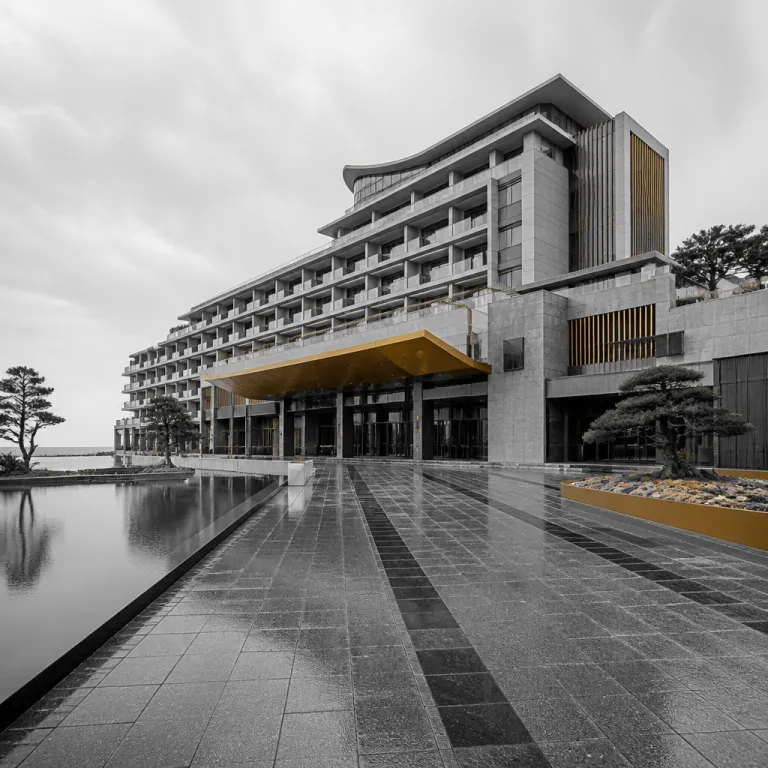
Hotel Taiwan 2026 as a design movement, not a booking query
Search for “hotel taiwan 2026” and you are really asking how Taiwan’s luxury hotels are being reimagined by architects who treat each property as a cultural project. In Taipei and across Taiwan, a new generation of designers is turning the typical city hotel into a stage where local materials, emotional architecture and precise service quietly reset expectations for international travelers. For business-leisure guests extending a stay after meetings in Taipei City, this shift means that the choice of hotel now shapes how you experience each district, each night and even each bowl of late-night food.
The context matters: Taiwan hosts several thousand hotels serving millions of visitors each year, and competition in every major city is intense. Architectural innovation has become a strategic answer, with hospitality groups commissioning names like André Fu, Antonio Citterio, Neri&Hu Design and Research Office, JC. Architecture & Design, Tszwai So, noiz architects and Wang Architects & Associates to create hotels Taiwan can confidently position on the global stage. When you check hotel options in Taipei, Taichung or Tainan now, you are often choosing between distinct architectural philosophies rather than just comparing room sizes or checking whether a property is family-friendly.
These architects share clear objectives: they integrate local culture into modern hotel design, revitalize existing structures and enhance guest experiences through sensory detail. Methods range from adaptive reuse of 1970s buildings in Taipei, Taiwan to new builds that frame a mountain river or a city park, always with an eye on sustainable materials and collaborations with local artisans. For travelers planning where to stay, understanding this design layer turns a simple hotel search into a curated route through Taiwan’s most consequential districts, from Xinyi District towers to hot spring valleys outside the main city grids.
Andre Fu’s Capella Taipei and the rise of the private residence hotel
Capella Taipei is a clear signal that the hotel Taiwan 2026 story is about intimacy rather than spectacle. André Fu’s concept treats the luxury hotel as a private residence in Taipei City, with layered textures, residential-scale furniture and a flow that feels more like a well-edited apartment than a conventional international chain property. Guests arriving from Taipei Main Station or the airport sense it immediately: the lobby is a living room, not a transit hall, and the night lighting is tuned for conversation, not selfies.
This approach has already attracted international design attention and it has raised the bar for luxury hotels across Taiwan. In practical terms, that means when you check rates for top hotels in Taipei now, you are comparing how convincingly each property delivers that private residence feeling rather than just scanning for a larger suite or a hotter rooftop bar. The shift also influences how other architects work; Neri&Hu’s redesign of Kimpton Da An Hotel, for example, integrates Da’an District Taipei textures and alleyway references into a calm interior that has been recognized by the Michelin Guide’s new Key distinction for design and sense of place.
For travelers, this is not abstract design talk but a set of concrete choices about where to sleep, eat and work. A business traveler might book Capella as a Taipei, Taiwan base, then use our recommended first timer’s island route to extend travel into coastal Taiwan after meetings end. Even families can benefit from this residential logic, since family-friendly suites and lounges feel more like a Taipei apartment than a formal hotel, making jet-lagged children and late-night room service feel less like a compromise and more like staying with a very stylish friend.
Antonio Citterio’s Sky Taipei and the dual brand tower experiment
If Capella Taipei refines the idea of a private residence, Antonio Citterio’s Sky Taipei pushes the hotel Taiwan 2026 narrative into vertical city-making. The 56-floor tower, housing both Park Hyatt and Andaz, is the first dual-brand project of its kind in Asia and it sits in Xinyi District, Taipei’s most visible business and luxury shopping area. Here, the question is how to stack two distinct luxury hotels in one building while keeping each brand’s personality legible from lobby to top-floor bar.
Citterio’s answer is to treat the tower as a small city, with Park Hyatt occupying the more formal, hushed layers and Andaz taking the more expressive, lifestyle-driven floors, all while sharing back-of-house efficiencies that matter to any international operator in Taipei, Taiwan. For guests comparing hotels in Taipei’s Xinyi District, Sky Taipei becomes a flexible tool: you can check rates for both brands, then choose the mood that fits your trip without changing address or sacrificing access to popular attractions like Taipei 101 or the nearby Palace Museum. The design language shifts subtly between the two, but both share a commitment to crafted materials and framed views over Taipei City that turn each night into a reminder of why this district is Taiwan’s main stage.
This tower also signals how design-forward properties are reshaping expectations for hotels Taiwan-wide. When a traveler later checks into a hotel in Taichung or a property in Tainan, they increasingly expect similar clarity of concept, even if the scale is smaller and the rates are lower. For a deeper read on how these flagship openings fit into the broader landscape of new properties, our analysis of Taiwan’s most telling recent hotel openings maps how Sky Taipei and its peers are pulling the entire market upward.
Hoshinoya Guguan, hot spring minimalism and the mountain city edge
Leave Taipei and the narrative of hotel Taiwan 2026 shifts from skyline drama to landscape immersion, with Hoshinoya Guguan as the reference point. Set in a river valley reachable from Taichung City, this hot spring retreat applies Japanese architectural restraint to a Taiwanese mountain context, using low-slung buildings, timber screens and carefully framed views to make the surrounding forest the main attraction. Every room opens to a private hot spring pool, and at night the property glows softly against the dark slopes, more lantern village than resort complex.
For travelers comparing a city hotel Taichung stay with a hot spring escape, Hoshinoya Guguan demonstrates how design can turn geothermal water into a full narrative rather than just a spa amenity. The property’s recognition by the Michelin Guide’s Key system places it alongside Capella, Kimpton Da An and Mandarin Oriental as one of Taiwan’s top design-led luxury hotels, and that matters when you check hotel options for a multi-stop travel route that might include Taipei, Taichung and Tainan. You are no longer choosing between urban and rural hotels in Taiwan as separate categories; you are curating a sequence of architectural experiences that move from Xinyi District towers to river stones and cedar.
This design seriousness is spreading beyond headline names. JC. Architecture & Design’s DING Hotel in Taiwan’s original capital works as a vertical village oasis, while Tszwai So’s transformation of The Blue Hotel from a 1970s shell into an Emotionalism landmark shows how even modest buildings can become destinations. As one expert summary puts it, “Emotionalism in architecture is a movement focusing on evoking emotions through design elements.” That same spirit informs noiz architects’ rooftop for Humble House Hotel, where patterns echo natural forms above Taipei City, and Wang Architects & Associates’ work on a sightseeing hotel in Taichung, proving that even mid-market properties can feel like part of the same thoughtful conversation.
Michelin Keys, neighborhood narratives and how to actually choose your stay
The arrival of Michelin Keys in Taiwan quietly formalizes what design-focused travelers have felt for years: architecture and interior coherence now sit alongside service and food as primary reasons to book a hotel. With Capella Taipei, Kimpton Da An, Mandarin Oriental and Hoshinoya Guguan all highlighted by the guide, the system is effectively curating a short list of top properties that define the hotel Taiwan 2026 landscape for a global audience. For you, that means the first filter when you check rates or check hotel availability can be design quality, not just loyalty points or proximity to a main station.
Neighborhood storytelling is the next filter. Kimpton Da An, reworked by Neri&Hu, pulls Da’an District Taipei alleyways, terrazzo and vernacular textures into its interiors, so that even a quick breakfast before a day of Taipei travel feels rooted in the city rather than generic. In Xinyi District, Sky Taipei connects directly to malls, offices and some of the island’s most popular attractions, while in older quarters near Taipei Main Station you will find properties like Orange Hotel, which we profile in detail in our guide to refined stays in Ximen and beyond, offering a more compact but still design-conscious alternative to the big towers.
Beyond Taipei, Tainan and Taichung are catching up fast, with projects like Hilton Tainan and new hotel Taichung developments bringing international standards to cities better known for food, temples and night markets. When you compare hotels Taiwan-wide, think in sequences: a luxury hotel in Taipei City for meetings, a design-forward property in Tainan near historical attractions and hot night market food, then a final night in a Taichung or Guguan hot spring retreat. This is how architecture turns a simple trip into a narrative, and how the work of a handful of architects ends up reshaping what travelers expect from every stay in Taiwan, from Signia Hilton scale towers to intimate river valley hideaways.
How design forward hotels are lifting every tier of Taiwan’s hospitality
The most interesting effect of hotel Taiwan 2026 is not just at the very top of the market. When Capella Taipei earns international accolades and Hoshinoya Guguan secures a Michelin Key, mid-range and even entry-level hotels in Taipei and other cities feel the pressure to refine their own design language. You see it in smarter lobby layouts near Taipei Main Station, in more thoughtful lighting around a Taichung City park, and in Tainan properties that frame temple roofs and night market streets as part of the room view rather than background noise.
Architectural studios are central to this quiet revolution. JC. Architecture & Design, Tszwai So, noiz architects, Neri&Hu and Wang Architects & Associates are not only working on headline luxury hotels but also advising on adaptive reuse projects that keep older Taiwan buildings in circulation as characterful places to stay. Their methods rely on modern software, sustainable materials and close collaboration with local artisans, which means that even when you check rates for a smaller hotel in a secondary district, you increasingly encounter spaces that feel intentional rather than improvised. The result is a Taiwan-wide network of hotels where design literacy is becoming a baseline expectation, not a niche luxury.
For travelers, this raises both the stakes and the rewards of each booking decision. A business-leisure guest might choose InterContinental Taipei or Signia Hilton for a conference, then shift to a smaller, design-led hotel in another Taipei district for a more relaxed final night, confident that service and spatial quality will hold. Families can prioritize family-friendly layouts without sacrificing aesthetics, while food-focused travelers can use hotels as launch pads into nearby popular attractions, from the Palace Museum in Taipei City to hot spring towns and coastal parks beyond. In every case, the architecture of your chosen hotel becomes the frame through which Taiwan’s cities, nights and meals come into focus.
FAQ
Which architects are leading Taiwan’s hotel design innovations ?
Several studios are shaping the hotel Taiwan 2026 conversation, including JC. Architecture & Design, Tszwai So, noiz architects, Neri&Hu Design and Research Office and Wang Architects & Associates. Their work ranges from rooftop landscapes in Taipei City to full-scale transformations of older buildings and new luxury hotel projects in Taichung and other cities. When you research hotels across Taiwan, these names often signal a stronger design narrative and more thoughtful guest experience.
What is Emotionalism in hotel architecture ?
Emotionalism in architecture is a movement focusing on evoking emotions through design elements. In the context of hotel Taiwan 2026, it means using light, materials, proportions and circulation to create specific feelings, from calm and privacy in a Taipei luxury hotel to openness and connection in a hot spring retreat. Properties like The Blue Hotel, reworked by Tszwai So, show how Emotionalism can turn a standard city hotel into a memorable stay.
How are traditional Taiwanese elements used in modern hotels ?
Architects in Taiwan increasingly weave traditional motifs into contemporary hotel design by using local stone, timber, brick patterns and courtyard typologies. In Taipei, Neri&Hu’s work at Kimpton Da An integrates Da’an District textures, while in Taichung and Tainan newer hotels frame temples, markets and parks as part of the interior narrative. This approach helps hotels connect guests to nearby popular attractions and neighborhood food culture without resorting to clichés.
Why do Michelin Keys matter when choosing a hotel in Taiwan ?
Michelin Keys highlight hotels where design, service and sense of place reach a consistently high level, which is central to the hotel Taiwan 2026 story. In Taiwan, Capella Taipei, Kimpton Da An, Mandarin Oriental and Hoshinoya Guguan have all been recognized by the guide, signaling that they are among the top options for travelers who value architecture and atmosphere. Using the Keys as a filter, alongside your own checks on rates and location, can simplify decisions in dense markets like Taipei City.
How should business leisure travelers plan a design focused route through Taiwan ?
One smart approach is to anchor your first nights in a Taipei luxury hotel near your main station or meeting district, then extend travel to secondary cities and hot spring areas. You might start in Xinyi District at Sky Taipei or InterContinental Taipei, move to a design-forward hotel Taichung or a Tainan property like Hilton Tainan for food and historical attractions, then finish at a hot spring retreat such as Hoshinoya Guguan. This sequence turns necessary business travel into a coherent architectural journey across Taiwan.